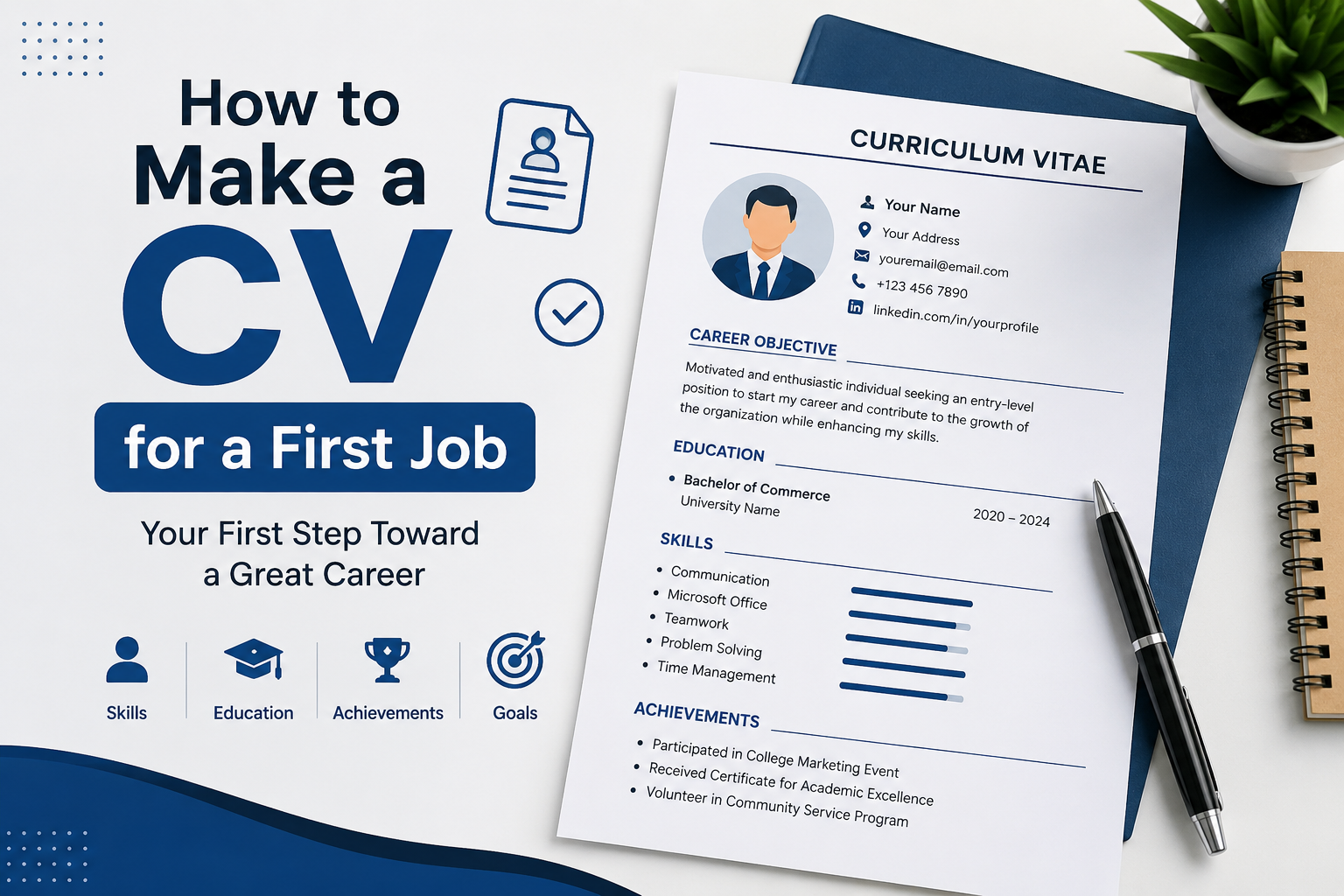
Drafting the CV for a first job can be difficult, especially when you don’t have any or very little work experience. But an employer expects that a beginner has not a long employment history. They want to see evidence of learning, abilities to function, trustworthiness, drive and promise. With a well-organized CV, limited experience can be convincing.
Start With a Clear Profile
Write a brief profile about yourself and begin with a personal profile that includes your name and contact information. Introduce yourself, your academic background, your positive attributes, and opportunity you are seeking. Avoid giving general answers as this will make the problem difficult to solve.
A graduate with a strong work ethic and who possesses strong communication, research and organizational skills seeking a position to use their academic knowledge and experience at a more practical level.”
Choose Information That Supports Your Goal
CV for 1st job should not be an autobiography. Choose materials that are pertinent to the job. Administrative skills include organization, computer skills, communication and attention to detail. Marketing, highlight writing, social media, research, creativity or academic projects are good choices for marketing.
Your Education Can Take the Lead
Education should be a major component if there is limited experience. Begin with the most recent qualification: Institution, subject, dates and achievements. Cite examples of coursework, research projects, presentation, competitions and/or academic activities demonstrating the required skills.
Experience Is More Than Paid Employment
Don’t assume that there is nothing of value if there is no employment section. Transferable skills can be demonstrated in internships, volunteering, freelance activities, within the university, university societies, by organizing events and responsibilities in the family business.
Include in your writing exactly what you actually did. Avoid the phrase ‘helped with a university project’ and use ‘collected and organized research data, prepared presentation materials and contributed to a team report’. Clear wording allows the employer to get a better understanding of your skills.
Show Skills with Evidence
The best skills section is a selective one. If you don’t have such skills, don’t put them on the resume. If you do not have a specific technical skill that you have and would use in your job, do not mention any of the software listed above, including Microsoft Office, data analysis, graphic design, data entry, research tools or software. Include transferable skills (e.g., teamwork, problem solving, communication, time management, and adaptability).
If there is evidence of the skill in other skills, link it to that evidence. It’s not as convincing to say you’re good at leading people as it is to provide the context for a student event or being part of a student group leadership.
Keep the Design Professional
A clean CV will generally be better than a fancy CV when applying for your first job. Employ clear headings, consistent spacing, readable fonts and bullet points. Do not use too many colors, graphics, lengthy paragraphs, misspelled words or personal information.
For most applications that rely on this for basic uses, it should be sufficient to use one page. Utilize additional space as needed based on pertinent experience.
Tailor Before You Submit
A CV should be used for each appropriate job opportunity. Carefully read the job description and look for the requirements, skills and tasks that are highlighted. Use relevant vocabulary in their context when it is appropriate to the context and meaning.
Check for grammatical errors, dates, formatting, contact information and consistency before sending. If the employer doesn’t specify, name the final version professionally, e.g. YourName_CV.pdf.
What to Leave Out
The first CV does not require all the information concerning your life. Avoid making false claims, overvaluing skills, hobbies, outdated or false experience. Don’t make up skills or tasks. An easy-to-read, straightforward CV is more believable than a fancy CV based on promises you may not be able to uphold.
FAQs
1. How long should a CV for a first job be?
If you are just getting started, you’ll need only one page. Emphasize Education, Skills, Projects and Experience that are relevant.
2. What if I have no work experience?
Explain internship, volunteer, academic projects and societies, certifications, and other activities that show transferable skills.
3. Should I include a photo on my CV?
Use only if it’s customary or requested in the country, industry, or job application.
4. Should I mention my GPA or grades?
Don’t hesitate to add good grades, or academic accomplishments, when they are relevant or add to the application; particularly if there is not a lot of work experience.
5. What is the best format for submitting a CV?
PDF is typically a secure answer since it retains the format of the document from device to device. Always adhere to employers’ requirements for submission.