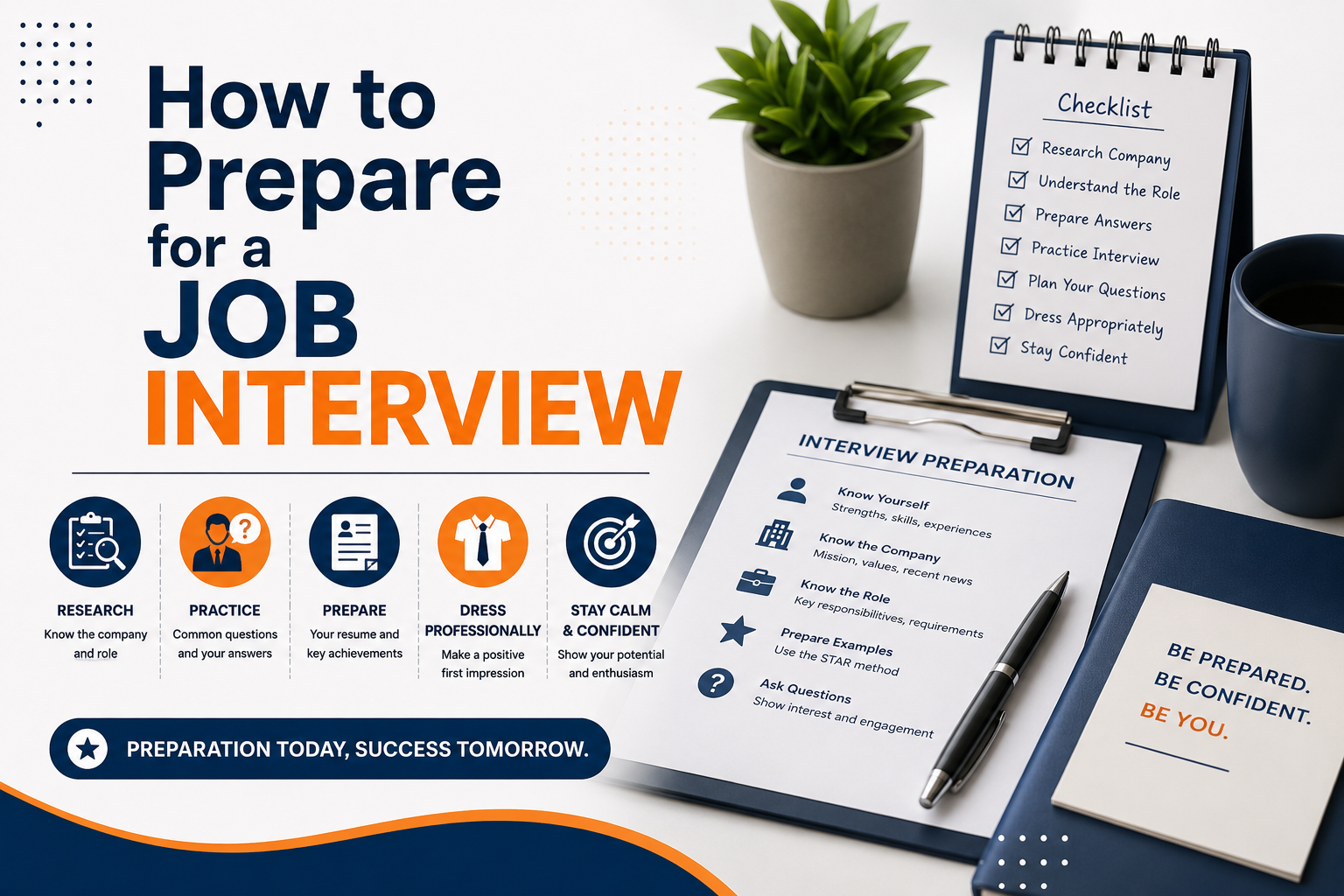
A job interview isn’t simply a formal discussion of your qualifications, it’s an opportunity to prove yourself to be a smart, a communicator, an adaptable, and a professional. Good preparation will help you to come into the discussion with a sense of calm and not winging it. Start reading the announcement of the job opportunity line by line. Look for the skills, duties, requirements and common phrases. Next link each requirement to evidence gained through education, work, internships, project, volunteering or other meaningful experiences.
Research the Organization Intelligently
Avoid just memorizing the company’s founding date, or mission statement. Analyze its key products/services, customers, current developments, rivals, culture and focus. Your goal is to ensure that you know and understand the position’s role within the organization and what it means to the employer. This information can assist you in developing strong responses to questions like, “Why do you want to work for us?” and “Why you are a good candidate for this position?”
Construct Your Professional Narrative
Write a brief biography of yourself, including your career history, career accomplishments, and why this opportunity is a natural progression. Don’t tell your CV in chronological order. Rather do so, develop a clear story that emphasizes your most pertinent skills and accomplishments. This translates to claims becoming credible evidence.
Rehearse Without Becoming Robotic
Memorization of full answers is essential, but can cause a robotic delivery. List some phrases for common questions such as: “Tell me about yourself”, “What are your strengths?”, “What is your area of weakness that you are working to improve?”, “Why should we hire you?”, and “Where do you see yourself in the future?” In the case of behavioral questions, use S.T.A.R. (Situation, Task, Action, Result). This will help you to maintain the coherence of your responses and maintain a natural style of speech.
Prepare for the Interview Environment
Ensure you are aware that the interview will be conducted in-person, via telephone, by video teleconferencing or by a panel. If the meeting is to be in person, organise your travel and should you be delayed for any reason, arrive with enough time to spare. Test the lighting, background, internet connection, device battery, camera and microphone set-up for a virtual interview beforehand. Pupil clothing should be tidy, suitable for the setting and not distracting.
Master the Art of Responding
In the interview, a good listener rather than thinking ahead to what to say next when the interviewer is talking. If the question is not clear, ask for clarification. Be concise and specific with your answers, use examples to back up your arguments, and admit when you don’t know. Don’t over state achievements or create experience. If the topic of discussion is the past employer, colleagues or institutions, be diplomatic and positive; criticism can negate a good performance.
Ask Questions That Demonstrate Acumen
An interview is also your opportunity to evaluate the position. Make a few well-crafted questions related to expectations for performance, team dynamics, professional growth, organizational priorities or issues, or challenges in the role. Stay away from questions that you can easily find on the company’s website.
Follow Up Professionally
Once you are done with the interview, review what you did well and what you did not do well. Send a brief follow up message if appropriate to let them know you are grateful for their reply and that you are interested. If they do not succeed, keep in mind that it’s not definitive, it’s diagnostic. Evaluate your effectiveness, pinpoint areas that need improvement and make adjustments in your exemplification before the next time.
The last step is to have a realistic mock interview. Have a friend, mentor or colleague test you with some random questions as well as assess your clarity, speed, posture and evidence. This exercise can reveal weak explanations prior to the meeting, and can make challenging moments much easier to manage.
FAQs
1. How early should I prepare for a job interview?
Ideally start a few days early to research the organization, analyze the job description, practice answers and iron out practicalities.
2. What should I say when asked, “Tell me about yourself”?
Provide a brief professional description of your most recent or current job including your best relevant accomplishment, capabilities, and your drive.
3. Should I memorize interview answers?
Remember important evidence and arguments—not sentences. Responses are prepared flexibly, resulting in authentic, responsive, conversational responses.
4. How can I answer behavioral interview questions effectively?
Apply a real-life scenario and organize it in terms of Situation, Task, Action and Result. Highlight activities you did and end with a result you achieved.
5. What questions should I ask the interviewer?
You can get a perspective on the job’s success, top priority, teamwork, growth, or obstacles that the victorious applicant will be required to conquer.
6. What should I do if I do not know an answer? Remain composed. Be honest about the limit; explain what you would do to find the answer; relate the question to related knowledge or experience.